As soon as Instagram added the stories feature to their app, Snapchat introduced the feature memories. The feature stories was first introduced by the popular app Snapchat but users could only share instant photos and 10-second videos. Despite the fact that some third-party add-on apps enabled sharing of existing pictures on Snapchat. However, it is believed recent updates of Snapchat app restricted third-party apps from enabling users to upload existing photos. Since the last few updates of Snapchat introduced memories, Sncapchatters can share previously taken photos without need to install additional apps.
A while back, the two apps were known for the following:
- Instagram is commonly used to share photos and videos while enabling users to comment on them.
- Snapchat is commonly known for sharing timed instant photos and videos that expire within 24 hours.
As of November 2016, Instagram in bundled with the following features:
- Sharing pictures – enabling comment
- Sharing videos – enabling comments
- Direct messaging (DM)
- Stories – (24-hour expiration period)
- Filters
- Sending disappearing photos & videos
As of November 2016, Snapchat is also bundled with the following features:
- Sharing instant snaps (pictures & videos)
- Private chat
- Stories – (24-hour expiration period)
- Filters
- Sharing memories (photos & videos)
- Video calling
Comparing the features of both apps, the primary features are somewhat identical. The question is who is copying who?
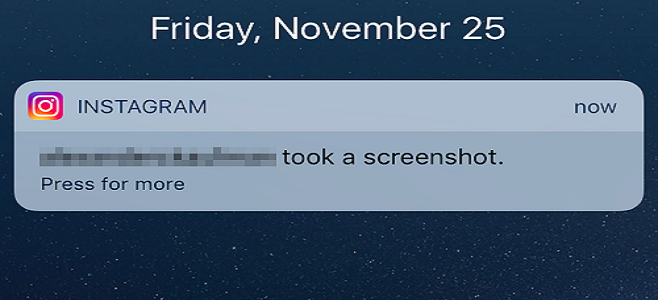
According to Mashable, Instagram’s latest Snapchat plagiarism update lets you send self-destructing messages to your friends – an excellent feature for sexy time. Just know that your friend will be notified if you take a screenshot of their message.
Buzzfeed remarked Friday that people are “freaking out” over the notifications, which work exactly as you’d expect them to. If you send a “disappearing message” to a friend and they take a screenshot, you’ll get a message on your phone saying so — just like you would on Snapchat.
Note that the notifications are only for the new disappearing message feature, which, if you’re anything like me, you probably can’t figure out how to use anyway.
Instagram has a weird, dual-identity thing going on right now: When you open the app, you see the feed you’re accustomed to, with the standard buttons for snapping pictures of babies and brunches, but you can also swipe over to a new window that lets you send ephemeral messages. Literally swipe from the left to the right of your screen to get to the new window, which looks like this (kitten not included):
Snap your picture or Boomerang and you’ll have the option to send it directly to individual friends. After they view it, it’ll delete itself.
Don’t worry, though: There is a recent Instagram screenshot feature that’s legitimately kind of creepy. Take a screenshot of your feed and Instagram will pop a new window down saying “You can share this post with your friends.”
Essentially, the app understands that you’ve taken a screenshot of an image, presumably to send to someone or post online, and it’ll offer a few ways to officially share the image if you tap the button.
You do you, but all we gotta say is: best not be sharing our beautiful turkey pictures on your Facebook. That’s just creepy.

Black Friday for 2016 is on Friday, November 25th, the day after Thanksgiving Holiday.
Many people await Black Friday and/or Cyber Monday deals – whether you are planning to buy Christmas gifts, new TV, smart phone, tablet, laptop or any other electronic device, retailers in general offer wide range of products at discounted prices.
Fortunately, many retailers begin offering many products at a lower price ahead of time. In fact, some retailers discount many products as early as the first week of November. However, very selective deals are reserved for Black Friday.
The world’s largest online retailer, Amazon, has already started Black Friday deals. It is definitely worth checking Amazon’s Black Friday deals week which offers daily deals on products you might be interested in.
The first thing you should do is decide on the products you are interested to purchase. Then head to Black Friday website to see various Black Friday deals offered by top retailers such as Best Buy, Target, Walmart, etc. The deals are not limited to electronics but literally everything including clothes. To save more money, look for early bird specials – those are deals usually ending around noon. Macy’s is one of the top clothing store that runs such early bird specials and offer really great discounts.
As for Cyber Monday deals, those are online deals also offered on the e-commerce websites of retailers as well as on online stores like Amazon. In addition to that, manufacturers also offer awesome discounts on many of their products.
What’s the catch?
Some of the Black Friday and Cyber Monday deals are usually products that will soon be discontinued – either production or support. For instance, a couple of years ago I purchased Acer Android based Tablet A500 on a Cyber Monday and it was a great deal! A year later, the company decided to discontinue support for the device.Yes, the price was awesome but the discontinued support is very disappointing. I careless about getting support from Acer but I surely would like to update the Tablet Operating System to a more recent Android version. After doing a lot of research, I realized that many people experienced the same problem and are very disappointed.

T-Mobile decided to beat the crowd by running weekend special of their T-Mobile One plan. The promotion has been extended till Tuesday, November 22nd, few days before Black Friday 2016.
Being T-mobile customer for over six years, I had decent experience overall. They offer lower plan rates than Sprint, Verizon and AT&T. However, as far as the network coverage goes, I haven’t been able to make calls in many places due to weak signal. in fact, the past two years I feel as if their network coverage degraded tremendously.
You may argue, it could be because of a use of an old smartphone. However, I’m sharing this experience based on Samsung Galaxy Edge S7 usage, which is supposedly considered to be the top Android smartphone in the market today.
I looked into the T-mobile promotion with the unlimited data. It’s clever how it was advertised but in reality, doesn’t work for everyone. For instance, I have 5-lines family plan, paying $140 which includes 6 GB data for each line. Upgrading to the new promotion will cost me $20 more which means the promotion itself is misleading.
T-Mobile promotion states:
GET 2 FREE LINES! Buy 2 phone lines and get 2 lines FREE. That’s only $120/mo. for 4 lines!
Looking at the promotion above, the cost for 4 lines is $120 and an additional $20 for the 5th line, the cost should be $140. However, that is not how it works. In fact, I called T-mobile customer service this morning to inquire about the promotion and was told my monthly bill will be $160 before taxes. While the existing data plan of 6 GB per line is sufficient for our use but I thought why not get the unlimited data plan for the same price!
What does unlimited data plan mean?
The way many of us understand it, it means UNLIMITED high speed data but T-Mobile false advertise it. Recently, FCC Reaches $48m Settlement with T-Mobile Over Unlimited’ Data Plans inadequate disclosures of ‘unlimited’ data plan restrictions.
Customers who use more data than 97% of our customers (currently over 28 GB per month) will have their usage prioritized below other traffic and may notice slower speeds and their majority of data usage must be on smartphone or tablet. See T-Mobile.com/OpenInternet for details on data prioritization.
In reality, unlimited high-speed data plan is capped at 28 GB. Once used, expect low speed for the remaining of the billing cycle. The FCC slammed T-Mobile with a fat fine after many heavy data customers filed complains.
With that said, T-Mobile new promotion remains a great deal for some families. Do not cross it out yet, especially if you currently have 2 lines on your plan, why not get 2 more lines free!

After two years of collaborating on self-driving cars, BMW and Chinese search giant Baidu have ended their partnership. Baidu is said to now be searching for a new automaker to team up with as it looks to ramp up its testing of autonomous vehicles in the US – The Verge
Wang Jing, the head of autonomous car development at Baidu, told Reuters the company was now using cars from Ford’s Lincoln in its US testing. “I’m open for any partners, actually I’m talking to many,” Wang said.
Spokespersons for Baidu and BMW declined to comment, but a BMW executive told Reuters that the two companies differed on the direction of their research into autonomous vehicles. “”We now have found that the development pace and the ideas of the two companies are a little different,” BMW’s China CEO Olaf Kastner said.
BMW has said it wants to bring a self-driving car to market by 2021. Baidu was more ambitious, aiming for 2018. There were other signs that the two companies weren’t entirely in lockstep. BMW had forged partnerships with other companies working on autonomous technology, including collision-avoidance detection firm Mobileye and chip-maker Intel.
BMW and Baidu first began collaborating in 2014. At the time, Baidu senior vice president Wang Jin said that his company would launch of a new self-driving car with the German car manufacturer by the following year. The prototype vehicle would be used to test Baidu’s autonomous technology, but would still have a human driver present.
That vehicle never materialized. But earlier this year, Baidu received an autonomous vehicle testing permit from California’s Department of Motor Vehicles, bringing the Chinese search giant one step closer to testing its self-driving cars on Google’s home turf. The Chinese search company has also been staffing up in Silicon Valley, building up a team of at least 100 engineers.
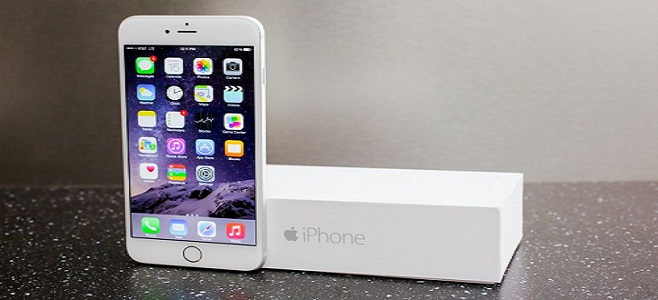
Based on GSM Arena, the 2014 generation of Apple phones had at least a few infamous issues attributed to their name. The one most probably remember is the so called “BendGate” – an issue even Apple itself sort of admitted to in the end.
Fast forward two years to today and it turns out many iPhone 6 Plus and even some regular-sized 6 units are still plagued by another annoying issues, already found to be related to the aforementioned bendy frame. It also has a catchy name – “Touch Disease” and manifests itself with screen flickers and touch issues. Today Apple officially acknowledged the issues, though not necessarily its connection to “BendGate” and is now offering iPhone 6 Plus users half-price repairs at $149.
It is also interesting to note that the US giant is still not admitting to any direct fault, as that would entail a design flaw. Instead, the OEM is rather passing it off more as an act of good faith, stressing that the problem only appears “after being dropped multiple times on a hard surface and then incurring further stress”.
What is actually happening underneath the surface is that bending the frame often leads to damage or unseating of an important touchscreen component. We also can’t fail to mention that Apple did, indeed, silently reinforce the structural stability on later generations, so there are definitely at least two sides to the argument.
Bottom line is that if you currently own a misbehaving iPhone 6 Plus, you can get it repaired at an Apple center for about as much a third-party shop would charge. Also, if you have paid full price for this repair in the past, Apple promises to refund your money.