
Am I a Coffee Addict?
Some people say drinking more than two cups of coffee a day makes you a “coffee addict.” But honestly, the term coffee lover sounds much nicer than addict, don’t you think?
Now, you might be wondering if addiction can really be measured just by the number of cups consumed. The truth is, not really! It depends on the cup size—are we talking about a 12-oz cup or a massive 24-oz one? That’s why counting ounces is a much fairer way to measure caffeine intake than simply counting cups.
From the photo above, you can probably tell that I’m a big fan of Tim Hortons coffee. I prefer medium roasts over dark roasts, and Tim Hortons offers the perfect balance. Their coffee actually reminds me of Dunkin’ Donuts, which happens to be my second favorite. Sadly, I don’t have access to Dunkin’ where I live right now. While Tim Hortons is based in Canada, they’ve expanded into neighboring U.S. states too.
As for Starbucks, I stopped drinking their coffee for a while because the Pike roast felt too strong for someone like me who drinks coffee black. That changed when they introduced the Blonde roast, which has a much smoother taste.
Of course, depending on where you live, there may be some fantastic local coffee shops worth exploring. At the end of the day, here’s to all the coffee lovers out there—cheers!

Winter on the East Coast can feel endless. The cold, the gray skies, and the piles of snow make you want to pack up and run somewhere sunny. That’s exactly what I did—I figured it was the perfect time to take a break from work and sneak in a vacation someplace warmer. And what better destination than California? Yosemite National Park had always been on my bucket list, so it felt like the perfect choice.
Now, Californians might find snow charming—it’s a novelty for them. But for me? I had just escaped the snow back home. The last thing I wanted was more cold weather! Honestly, I didn’t even realize California got snow. I pictured palm trees, sunshine, and beaches—not icy roads and freezing temperatures.
A friend of mine in Fresno suggested we take a little road trip to Yosemite since it’s only about an hour and a half away. That sounded great to me—an easy drive, some nature, and hopefully lots of that famous West Coast warmth. At the start, everything was smooth sailing. The drive out of Fresno was actually pretty fun—clear skies, nice scenery, and good company.
But then, as we started heading into the mountains, things took a turn. The temperature inside the car began to drop… and not just a little. It went from a comfortable 59°F in Fresno all the way down to 28°F as we got closer to the park gates. I kept checking the display thinking, “There’s no way this is right.”
Then came the road signs. Big warnings about how chains might be required on car tires to enter the park. I’d never even thought about having chains on wheels before—it felt like something out of a movie. And sure enough, the further we drove, the more snow started to appear. First it was just a dusting on the trees, then patches along the road, and before long, it was everywhere.
It was surreal. One minute I was chasing the idea of sunshine in California, and the next I was back in a full-on winter scene—snowy roads, icy air, and that crisp mountain chill that nips at your face the moment you open the window. Definitely not the warm getaway I had pictured, but in a strange way, it made Yosemite feel even more magical.
Does it snow in Yosemite?
Yes! And I have to admit—I did not expect it. Snow in California felt like a plot twist. But given the higher elevation of the mountains, a few flurries here and there shouldn’t have been a total surprise. From what I could tell, it had probably snowed the night before. The roads were mostly clear and well-maintained, but my initial thought was, “Let’s just turn around. I didn’t come to California to deal with snow!”
Of course, my friend had other plans and insisted we drive further into the park. In hindsight, I’m glad we did. The further we went, the more stunning the scenery became. Eventually, we pulled over at a viewpoint just past the tunnel. The sight took my breath away—towering cliffs dusted with snow, pine trees glistening, and the crisp mountain air making everything feel alive. We stepped out for a few minutes to take pictures, shivering a bit but grinning the whole time. It was one of those moments that makes you forget the cold entirely.
Yosemite National Park is located in central California and is surrounded by quaint Sierra Nevada gateway towns, each with its own charm. The park has five main entrances, making it easy to access from different directions, and every route offers its own unique adventure. Whether you’re hiking through granite cliffs, camping under the stars, or just stopping to admire the views, there’s something for everyone.
That said, I’ll admit—winter isn’t my ideal time to visit. The snow and cold weren’t exactly what I had in mind when I imagined a California getaway. But even so, Yosemite’s beauty is undeniable, no matter the season. If you find yourself in central California, it’s absolutely worth a visit, even if your boots need a little extra traction.
For more videos and photos of Yosemite, you can check out click here

Applying for a job can be both exciting and challenging, especially in today’s highly competitive job market. With so many qualified candidates often vying for the same position, standing out from the crowd requires careful preparation and attention to detail. One of the most effective ways to increase your chances of being noticed is by submitting a well-crafted resume. After all, the primary purpose of a resume is to secure a job interview, and the interview itself is what ultimately opens the door to employment opportunities. Below, you’ll find a sample resume for reference, but before that, let’s discuss why resumes matter so much.
Job openings exist to address a specific need within a company or organization. Each position has its own set of requirements—whether it’s certain skills, levels of experience, or educational qualifications—that the employer considers essential. The challenge arises when dozens, or even hundreds, of applicants are competing for that same role. To streamline the process, many companies now rely on electronic applicant tracking systems (ATS). These systems scan, sort, and score resumes based on keywords, professional experience, skills, and education. If your resume does not align closely with the requirements outlined in the job description, it may not even make it to a human reviewer.
This is why tailoring your resume for every application is so important. Instead of using a generic template for all job postings, carefully read through the description of the role you are applying for. Pay close attention to the listed qualifications, preferred skills, and required experience. Once you understand what the employer is seeking, highlight your most relevant strengths, whether through your work history, achievements, or even applicable college coursework. Adding brief but clear descriptions of past responsibilities and accomplishments that directly connect to the job requirements can make your resume stand out to both the automated system and the hiring manager.
While a resume alone can often be enough to apply, including a cover letter is strongly recommended. A cover letter allows you to introduce yourself on a more personal level, beyond the facts and bullet points on your resume. It provides a valuable opportunity to explain why you are interested in the position, what you admire about the company, and how your background makes you an excellent fit. A thoughtful, well-written cover letter can set the tone for your application, demonstrate genuine enthusiasm, and capture the attention of recruiters or hiring managers. In some cases, it might even be the deciding factor in whether your application advances to the interview stage.
In short, while landing a job may feel overwhelming in a crowded field of candidates, equipping yourself with a strong resume and a compelling cover letter can greatly improve your chances. By tailoring each application to reflect the specific job description, showcasing your most relevant experiences, and taking the extra step to write a personalized introduction, you can position yourself as a serious and motivated candidate worthy of consideration.
Sample resume writing:
First & Last Name
1234 Street Name, Apt. N
City Name, State 12345
Tel: (000) 000-0000, E-mail: [email protected]
OBJECTIVE:
To obtain a position in computer networks offering the opportunity to utilize my working experience and technical expertise while offering growth and professional advancement.
WORK EXPERIENCE:
Company #2 Name City Name, State Sept 12 – Present
Wire Harnesses Engineer
- Building Prototype wire harnesses.
- Attaching all terminals and connectors.
- Reading blue prints.
- Performing continuity test and final inspection.
Company #1 Name City Name, State Mar 10 – Aug 12
Network Administrator Assistant
- Assigning login names for new employees.
- Upgrading old systems with the necessary hardware/software to meet employees’ needs.
- Configuring new stations to access network server.
- Installing software applications and troubleshooting network software related issues.
EDUCATION:
University/College/Technical School Name City Name, State
- Bachelor of Science in Computer Engineering: GPA: 3.7 August, 2016
RELEVANT COURSES:
- Comp Hardware Design: Hardwired and designed a microprocessor and memory using very high design language (VHDL).
- Computer Electronics: Designed selected electronic circuits such as signal conditioning amplifiers. Switching and digital logic circuits, using FET and BJT devices, A/D and D/A converters.
- Data Structure (C++): Structured data types including arrays, stacks, queues, linked lists, trees, and graphs. Algorithms and applications of data structures.
DESIGN PROJECTS:
- Senior Design Project: Pet owners can watch, feed and water their pets while on vacation. Programmed PC parallel port to directly communicate with external hardware devices, from a remote location, to initiate commands in real-time.
- Object Detection Device: Serial communication between two HC11 Microprocessors using assembly codes and used Ultrasonic sensors for object detection.
- CPU and ALU Design: Designed both CPU & ALU with hardware design language (VHDL) also designed them in Schematic capture.
- File Transfer Protocol: Created a file transfer protocol (FTP) program, allowing two or more computer users to chat in real-time using C++.
SKILLS:
- MS Windows OS (XP, NT…)
- MS Office Applications
- Visual C++, python and Visual Basic
- Visual Studio .NET
- Active Server Pages (ASP)
- PSPICE to Sketch electric circuits
- MatLab for filters and signals
- Xilnix hardware design package
- Certified PC Technician
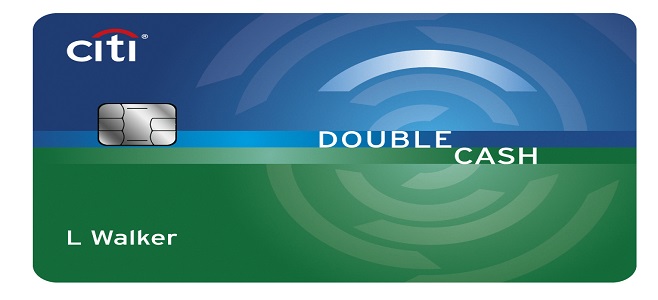
Many people hardly carry any cash on them but use credit cards for all their purchases instead. If that sounds like you, it is worth checking Citi Double Cash Credit Card.
This particular credit card isn’t necessarily the best choice for everyone, especially if you tend to carry a balance from month to month. Unless you pay your statement in full at the end of every billing cycle, the interest charges can quickly outweigh any rewards you earn. In fact, there are plenty of other credit cards on the market that offer lower interest rates, which may be a better fit if you’re more concerned about minimizing interest costs than maximizing rewards.
That being said, for someone who consistently pays their balance in full, the Citi® Double Cash Card can be a great everyday card. Personally, it’s the one I reach for the most. I use it to cover day-to-day expenses like groceries, dining out, subscriptions, utilities, and even larger recurring bills. It’s reliable, straightforward, and easy to manage, which is why it’s become my go-to card over time. You might be asking yourself—what makes it stand out compared to all the other cards available?
The answer lies in how rewards are structured. Many credit cards use a points-based system, where you accumulate points for every dollar you spend. These points can often be redeemed in different ways: for merchandise in the issuer’s online store, a wide selection of gift cards, or as credits applied directly toward your statement balance. The flexibility is nice, but what really matters is how much value you’re actually getting back relative to your spending habits.
That’s where the Double Cash Card shines—it takes the guesswork out of rewards. Instead of juggling categories or trying to remember where you’ll earn extra points, you simply get cash back on everything you buy. You earn 1% when you make a purchase and another 1% when you pay it off, giving you a total of 2% back without any hoops to jump through. It’s simple, transparent, and especially rewarding for people who manage their credit responsibly.
Of course, no single card is perfect for everyone. The right credit card really depends on your lifestyle and spending patterns. For example, frequent travelers might get more value out of a travel rewards card that offers perks like bonus miles, free checked bags, airport lounge access, or hotel upgrades. If you drive a lot, a card with higher cash back rates on gas purchases might be more beneficial. On the other hand, if you like keeping things simple and don’t want to worry about rotating categories or point conversions, a flat-rate cashback card like Double Cash can be one of the most practical options.
Ultimately, the key is to match the card to your financial habits. If you pay off your balance consistently and want a reliable, no-nonsense rewards program, Double Cash is hard to beat. But if your priorities lean more toward travel perks, luxury benefits, or interest savings, exploring other cards could lead you to a better fit.
Why Citi Double Cash Credit Card?
What I liked about Citi Double Cash Credit Card is first, you earn 1% unlimited cash back on every purchase you make. Then, as you pay for those purchases, whether it’s all at once or over time, you earn an additional 1% cash back on those payments, as long as you pay the minimum due. Basically, you earn unlimited 2% on everything.
Citi Double Cash is a credit card that rewards you twice!
At some point, Chase Freedom was the best card until they decided to retire the 3% unlimited cashback on purchases. Now Chase Freedom is no different than Discover Credit Card which was the first credit card with the revolving quarterly categories.
Personally, I’m not a fan of credit cards with rotating quarterly categories. It can be difficult to keep track of which purchases qualify for the 5% rewards, and on top of that, the earnings are capped within those select categories.
That being said, I still keep both my Chase Freedom and Discover cards. However, I rarely use the Chase Freedom anymore, especially since they discontinued online bill payment.
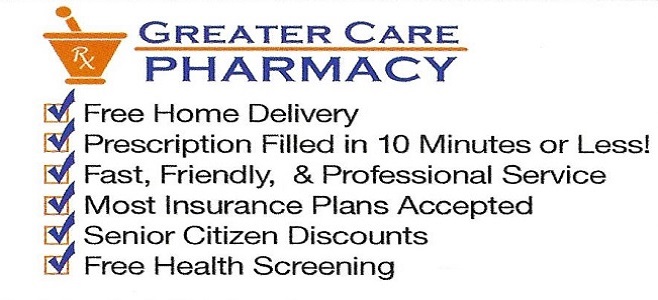
Greater Care Pharmacy is conveniently located inside Value Fresh Market Place, at the corner of Hoover Rd and 10 Mile Rd in Warren city, Michigan.
Location address: 24800 Hoover Rd, Warren, MI 48089