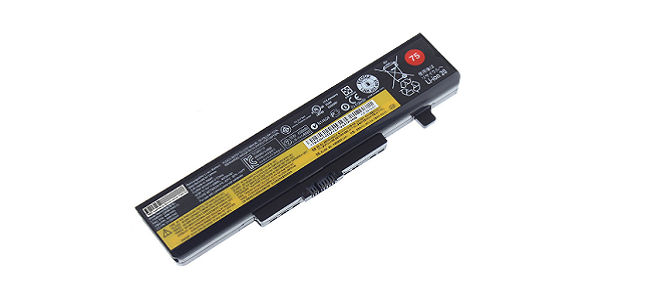
I purchased Lenovo ThinkPad Edge E431 two years ago. The laptop works ok but the battery needed replacement before expected. So, I searched on Amazon for a replacement battery compatible with the laptop model I have since purchasing a battery directly from Lenovo costs $99.99 (now on sale for $85.99) which is really ridiculous. I was able to find the Lenovo battery on Amazon for $70.87 and most likely will end up ordering it.
I came across Nb-battery 10.8v which costs only $24.99. I thought it was a great deal and purchased it. Once I received it, I threw away the old battery which I should have kept.
The Nb-battery works ok with exception to one issue. When it is fully charged, the laptop runs on it for about 3-hour period with normal use. However, when running CPU intensive applications, it drains faster which is expected.
The issue I’m having with this battery is that, when it reaches ~25%, without any warning, the laptop powers down as if a hard reset was used. Basically, it is not a normal shut down wherein the laptop saves settings and powers down.
To get around this issue, I usually plug in the charger when the battery is around 30% capacity to prevent the sudden power down from happening.
Even though Lenovo original battery costs four times the price of the Nb battery, I’m planning to buy one to replace the low quality Nb battery I mistakenly purchased.
Kindly, do not make the same mistake I made. Always read products reviews before placing an order.
According to Reuters, the U.S. Supreme Court on Tuesday sided with Samsung in its big-money smartphone patent fight with Apple, throwing out an appeals court ruling that the South Korean company had to pay a $399 million penalty to its American rival for copying key iPhone designs.
The 8-0 ruling, written by Justice Sonia Sotomayor, held that a patent violator does not always have to fork over its entire profits from the sales of products using stolen designs, if the designs covered only certain components and not the whole thing.
The justices sent the case back to the U.S. Court of Appeals for the Federal Circuit in Washington to determine how much Samsung must pay. But they did not provide a road map to juries and lower courts on how to navigate similar disputes in the future.
Apple spokesman Josh Rosenstock said in a statement that the U.S. company remained “optimistic that the lower courts will again send a powerful signal that stealing isn’t right.”
Samsung told Reuters in a statement the ruling was a “victory for Samsung and for all those who promote creativity, innovation and fair competition in the marketplace.”
Following a 2012 jury verdict favoring Apple, Samsung initially was hit with nearly $930 million in penalties, later cut by $382 million, for infringing Apple’s iPhone patents and mimicking its distinctive appearance in making the Galaxy and other competing devices.
Samsung in December 2015 paid its Cupertino, California-based rival $548 million. But Samsung took the matter to the Supreme Court, saying it should not have had to make $399 million of that payout for copying the patented designs of the iPhone’s rounded-corner front face, bezel and colorful grid of icons that represent programs and applications.
With the products that used iPhone designs, Samsung went on to become the world’s top smartphone maker.
Tuesday’s ruling followed a ferocious legal battle between the world’s top two smartphone manufacturers that began in 2011 when Apple sued Samsung for patent and trademark infringement. It was one of the most closely watched patent cases to come before the top U.S. court in recent years.
The legal dispute centered on whether the term “article of manufacture,” on which design patent damages are calculated in U.S. patent law, should be interpreted as a finished product in its entirety, or merely a component in a complex product.
In court papers, Samsung, Apple and the U.S. government all agreed that the term could mean a component.
But Apple urged the Supreme Court to affirm the appeals court’s ruling because Samsung presented no evidence that the article of manufacture in this case was anything less than its entire smartphone as sold. Samsung, meanwhile, said that it did not have to present such evidence.
Sotomayor, writing for the unanimous court, said that the law is clear. The term “article of manufacture is broad enough to encompass both a product sold to a consumer as well as a component of that product,” she wrote.
PERIOD OF UNCERTAINTY
The justices nevertheless refused to devise a test for juries and lower courts to use to discern what a relevant article of manufacture is in a particular case, a task that could be fraught with difficulty when considering high-tech products.
“No doubt whether with Apple-Samsung, or some other design patent case, we are going to have a period of uncertainty where courts will be trying to formulate a test and what the boundaries are,” Richard McKenna, an expert in design rights at the law firm Foley & Lardner in Milwaukee, said in an interview.
In court papers, Apple said its iPhone’s success was tied to innovative designs, which other manufacturers quickly adopted in their own products. Samsung, in particular, made a deliberate decision to copy the iPhone’s look and many user interface features, Apple said.
Samsung argued that it should not have had to turn over all its profits, saying that design elements contributed only marginally to a complex product with thousands of patented features.
Design patent fights very rarely reach the Supreme Court. It had not heard such a case in more than 120 years.
The case is Samsung Electronics Co, Ltd v. Apple Inc, in the Supreme Court of the United States, No. 15-777.
(Reporting by Andrew Chung in New York; additional reporting by Lawrence Hurley in Washington and Se Young Lee in Seoul; Editing by Will Dunham and Stephen Coates)
Few days following Black Friday, I was looking for deals on wireless phone plans for families. I stopped by AT&T to inquire about their unlimited data plans which costs $214 before taxes and other fees unless you sign up for 2-year contract with Direct TV. Despite the fact that AT&T was running a promotion of paying off any remaining balance on each phone line up to $650. In return, you would need to purchase new phones from them while they keep your old phones.
However, in my case, most of my phones were paid off so that defeats the purpose of switching to AT&T and buying new phones.
 While walking in the mall, I noticed a very attractive family plan offered by Sprint. I must say no other wireless carrier among the top four US wireless service providers can beat the unlimited Freedom plan offered by Sprint!
The plan states:
Get Unlimited data, talk and text starting for $20 per month/line
Switch to Sprint and choose Unlimited Freedom. Plans start for $20 per month/line for a family of five.
For a limited-time, when you get 2 lines, you can get 3 more lines free! That’s just $100/mo. for 5 lines.
Enjoy unlimited mobile optimized streaming videos, gaming and music. And, unlimited 4G LTE data for most everything else.
It didn’t stop there! In addition, Sprint offered iPhone 6s and/or Samsung Galaxy 7, buy one get one FREE.
It was a perfect offer especially that it was about time for me to upgrade at least two of my phones but why not upgrade all!
So, what is the catch?
I was told by Sprint employee that I can reuse my T-Mobile phones with Sprint service once I pay off the balance. All I really needed to do is contact T-Mobile to request unlock code. Unfortunately, that is not true because T-Mobile & AT&T use GSM networks while Sprint & Verizon use CDMA networks. What that means is phones supporting GSM networks use SIM cards, making them easily reusable especially when travelling abroad. However, CDMA phones are network specific. Basically, switching from T-Mobile to Sprint service requires buying new phones.
By the time I decided to switch to Sprint service, the promotion for Samsung Galaxy 7 was over. The only available promotion on phones was for the iPhone 6s. Despite the fact that I’m not big fan of Apple products, I thought why not try out the iPhone. So I purchased two iPhone 6s, got two FREE iPhones and got FREE Samsung J3 (worth $192) for the 5th line.
You are probably thinking that’s such an awesome deal! So what is the problem?
The problem is the coverage. Theoretically, based on the service coverage map on Sprint website, I should have LTE coverage. However, I noticed huge difference between T-Mobile coverage and Sprint. Yes, the price of Sprint unlimited Freedom plan is great but what is the point of signing up for such a service with such a bad coverage. Unfortunately, I was unable to make calls from office nor have access to high speed data.
How bad was Sprint coverage?
Let’s just say I switched back to T-Mobile within 24-hour.
While I was able to retain same account number with T-Mobile, I ended up paying $20 re-activation fee per line. In addition, Sprint charges $35 restocking fee for each phone. Basically, the cost of switching to Sprint and back to T-Mobile will be over $200.
The point is, before considering switching your wireless service to a different carrier, it is a good idea to ask someone who’s using that service to help you make an informed decision before making the same mistake I made.
Despite the fact I’m unhappy with T-Mobile coverage lately but it is still way better than Sprint network. That does not mean you should not take advantage of Sprint unlimited Freedom plan provided that you have decent service coverage in your area.
When Instagram was first launched, it attracted many users as the fastest growing photo sharing mobile app. It did not take long until it was acquired by Facebook for $100 Million. I say the founder(s) of the app rushed into selling it. If waited just couple more years, it could have been sold in the billions.
Around the same time Instagram was sold, Snapchat was offered $3 Billion in which the offer was turned down.
Instagram initially started with only photo sharing feature while enabling comments on posted photos. The second feature was added shortly after which is sharing 15-second long videos, attracting many of existing Vine app users which only offered sharing six-second long videos at the time. However, recently Vine announced extending the video sharing length up to 140-second while keeping the six-second format to act as preview for the 140-second videos.
Instagram continued adding features, not really new features rather popular features available on other mobile apps, mainly incorporating many of Snapchat features.
You might like: Instagram notifies your friend when you screenshot their DMs
Instagram is currently bundled with the following features:
- Sharing pictures – enabling comment
- Sharing videos – enabling comments
- Direct messaging (DM)
- Daily stories – (24-hour expiration period)
- Boomerang – for creating captivating mini videos that loop back and forth
- Sending disappearing photos & videos
Comparing the features of Instagram and Snapchat, the primary features are somewhat identical. Should it be called InstaSnap? Well, you can call it whatever you like.
The question remains who is copying who?
Few years back, mobile phones only had the capability of making voice calls and sending text messages. Now, mobile phones (smartphones) have the capability of performing the functions or a personal computer and more. At the same time, mobile apps have grown tremendously on Google Play and Apple Store. However, only handful mobile apps stood out and are being used by millions of users around the world. Snapchat has proven to be probably the most popular mobile app in the market today for sending photos and pictures, both of which will self destruct after a few seconds of viewing.
Around the same time Facebook acquired Instagram for $100 million, Facebook also offered to buy Snapchat for $3 billion in which the offer was turned down. Many people thought Evan Speigel, the 23-year-old CEO of Snapchat should have agreed to the deal. However, Snapchat now worth five times the initial offer.
The app continues growing mostly among teens and young adults whom Snapchat has been part of their daily lives. While it is fun to share special moments with others, mobile apps usage have become more addictive than coffee drinking for most people.
Snapchat started with just the features of sending self destructing photos and videos, then introduced stories and private messaging features. New features kept getting added over the course of the past few years.
The feature stories was first introduced by Snapchat but recently Instagram just added a similar feature called also “stories”.
Despite the fact that some third-party add-on apps enabled sharing of existing pictures on Snapchat as instant snaps. It is believed recent updates of Snapchat app restricted third-party apps from enabling users to upload existing photos. Since the last few updates of Snapchat introduced memories, Sncapchatters can share previously taken photos without need to install additional apps. However, there is difference between sharing instant photo or video snaps and memories.
Snapchat is currently bundled with the following features:
- Sharing instant snaps (pictures & videos)
- Messaging
- Daily stories (24-hour expiration period)
- Filters
- Sharing memories (photos & videos)
- Video calling
A one important feature worth noting is the “snap filters” which are fun to use and have gotten very popular. Best of all, many filters are location and events specific, making them much more interesting to use. In case you are bored and have plenty of free time, have fun testing different snap filters and try getting creative.
It appears that Instagram is imitating Snapchat and not the other way around. Even though, you may argue the feature “memories” introduced by Snapchat could be equivalent to the initial concept Instagram was founded upon which is sharing photos.
Comparing the features of Snapchat and Instagram, the primary features are somewhat identical. Perhaps Facebook took it personal when Snapchat rejected the offer back in 2014. Instead, used different terms to describe newly added features to Instagram; having similar functionality to Snapchat features.